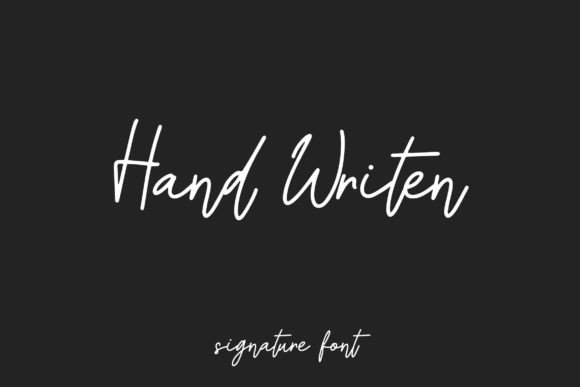
Hand Writen: A Script Font for Personalized Branding
Real-World Performance in Design Projects
Hand Writen has proven itself as a versatile tool across various design scenarios. In logo design, it adds a unique flair that can elevate a brand identity, especially when paired with more structured fonts for balance.
In packaging design, it brings a tactile quality to product labels and premium packaging. It works well for small businesses selling handmade goods, artisanal products, or luxury items where the visual storytelling matters as much as the product itself.
For social media graphics, Hand Writen stands out in captions, quotes, and decorative accents. It helps create a cohesive look across platforms without feeling too overused or generic.
On website headers and blog graphics, it performs best in short phrases or as a header accent. It's less effective for long paragraphs but shines in editorial design when used sparingly for emphasis or callouts.
It also fits nicely into Canva templates and Cricut projects, offering a creative font option for printable designs and DIY crafts. As a commercial font, it shows promise for digital products and branding assets that require a personal touch.
Where to Use Hand Writen with Caution
While Hand Writen is expressive, it's not always the best fit for every project. Large headlines should be approached carefully—its fluidity can become difficult to read at smaller sizes or in low-resolution formats. Short phrases and brand marks are where it truly excels, adding character without overwhelming the message.
When using it for supporting text, ensure it doesn't compete with the main content. For premium packaging, it enhances the perceived value, but only if the overall design maintains clarity and professionalism.
Also, consider how it interacts with other fonts. Testing it beside a serif font or a sans serif font can help achieve better font pairing and visual hierarchy. Pairing it with another script font might lead to visual clutter unless done intentionally.
Readability and Visual Impact
Readability is a key concern when using any display font. Hand Writen performs well in larger sizes, particularly in print or high-resolution digital contexts. However, when scaled down or used in long blocks of text, its organic curves can reduce legibility.
This makes it more suitable for brand identity elements rather than body copy. When used correctly, it can enhance audience trust by appearing more human and relatable. It also contributes to brand recognition through consistent use in marketing visuals and packaging.
The font’s impact on visual mood is subtle but effective. It evokes a sense of creativity and authenticity, which aligns well with creative industries such as publishing, art, and lifestyle brands.
Practical Designer Notes
Before committing to Hand Writen in client or business work, consider these practical steps:
- Test it in black and white to see how it holds up without color.
- Check small-size readability to ensure it remains legible in all contexts.
- Try it on real mockups to understand how it behaves in different environments.
- Compare uppercase and lowercase to see if it maintains consistency in tone.
- Review spacing to ensure characters don’t appear cramped or spaced awkwardly.
- Test it beside other font styles like serif, sans serif, or display fonts to find the best font pairing.
- Confirm commercial licensing before using it in client or business projects.
These steps will help ensure that Hand Writen is used effectively and responsibly in your design workflow.
A Final Word on Hand Writen
Hand Writen is more than just a script font—it’s a creative tool that can bring warmth and personality to your design projects. Whether you're working on web design, editorial design, or packaging design, it offers a unique voice that can help your brand stand out.
As with any creative font, it’s important to use it thoughtfully. When applied correctly, Hand Writen can add depth, emotion, and a human touch to your visual storytelling. It’s a valuable addition to any designer’s toolkit, especially those looking to craft a brand identity that feels genuine and expressive.